
How to Respond to a Homesick Letter from Your Camper
The Sad Letter
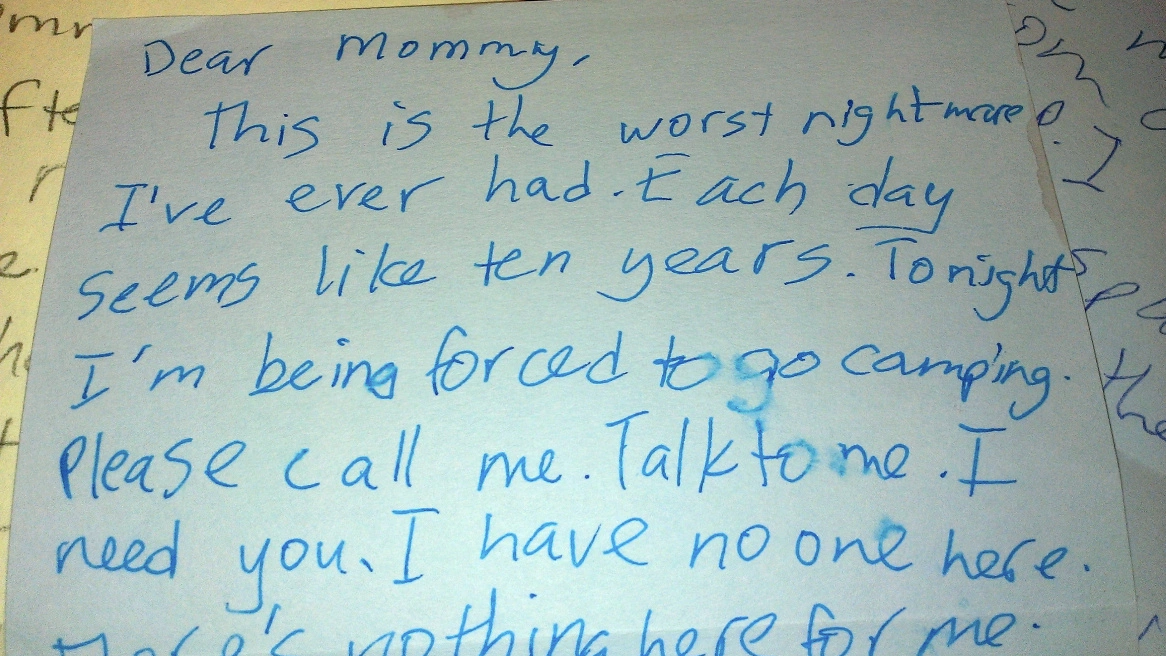
You’re anticipating with much excitement your camper’s first letter from camp. It finally arrives, and this is what it says…
“I want to come home!”
“It’s awful here.”
“I hate everything.”
“This is worse than prison.”
Your Options
Option #1: Hop in your car and drive to rescue your child immediately.
Option #2: Take a deep breath and think about possible next steps.
As a veteran camp director with a lot of experience helping campers (and parents) work through the difficult transition that often accompanies being away from home, especially the first time, I would highly recommend you choose option 2. It will be better for both you and your child.
Getting a sad letter from your child is difficult, but, as experienced camp parents will tell you, you should expect to receive at least one sad letter during your camper’s time at camp. Letters are usually written during quiet times when campers are feeling more reflective. Often, even when they’ve written a super sad letter, the camper is actually adjusting well to camp and is letting you know the emotions they felt during a particularly down time (like rest hour or bedtime).
Next Steps
If you feel uneasy after hearing from your camper, here are a few steps you can take (after your deep breaths, of course):
- Remind yourself that homesickness is an emotion that most campers feel to some degree at camp and many college students experience, as well. Perhaps you can remember one of your own experiences being homesick – at camp, at college, or while studying abroad.
- Call a friend who is an experienced camp parent who has likely received one of these letters in the past.
- Know that in the vast majority of homesickness, the fun and excitement of camp eventually far outweigh any sad feelings.
- Contact the camp via phone or email and ask for an update on how your camper is doing. Let them know you got a sad letter and want to see how your child is adjusting. Remember, the letter could have been written and sent a few days ago, so the emotions expressed may not still be accurate.
- Write an encouraging letter to your camper. Acknowledge that you read their letter and tell your kid you want to be updated on everything, the sad moments but also the activities and new friends and adventures they’re having. Here are some ideas for positive, encouraging messages you can send to your camper.
Positive Messages for a Homesick Camper
Whether you’re communicating with your camper via postcards, letters, email, or phone, here are some ideas for how you can respond to their sad, homesick pleas from camp.
Validate Feelings
Your child might be genuinely feeling severe discomfort from being away from home. Acknowledge that by saying, “I know you feel miserable right now and I’m sorry this is so hard for you.” However, if they ask to be picked up early or talk to you on the phone, remind them that you’re going to stick with letter-writing only and that you’re not coming to get them early!
Provide Encouragement
Reassure them that you have confidence in their ability to face this challenge and have a great camp experience. Say, “Even though you don’t feel like you can do this, I know you can.” Let them know how proud you are of their independence and how excited you are to hear of their accomplishments when they finish camp.
Redirect
Redirect the conversation to something positive. Comment on a recent picture you saw of them online: I saw a picture of you jumping off your paddle board! It looked like so much fun! You can also help your child focus on the positive by reminding them of some of the positive things of camp that they don’t get to experience at home: “I can’t believe you get to have a campfire with marshmallows every night. Lucky duck!” Sometimes kids are concerned that they’re missing out on things happening at home or get worried about you missing them too much. Update them on some of the boring, busywork happening at home to assure them that camp is where they’re supposed to be. Asking questions about an activity they were particularly excited about or about their cabin mates and counselors can also be fun.
Remember the WHY of camp
As you deal with hearing about your child’s discomfort, it’s important to remind yourself and your camper why you chose the camp experience in the first place! Sometimes homesickness is part of the growth process, but we can instill confidence in our campers by encouraging them through uncomfortable and challenging situations rather than completely removing them from all sources of discomfort.
For many kids, camp is their first step toward independence. Leaving the familiarity of home for the first time, most kids experience some degree of discomfort or unease as they adjust to new people, activities, challenges, and experiences. These feelings of discomfort are completely normal, and it is important to discuss the normalcy of homesickness and feeling uncomfortable in new environments before your child leaves for camp.
In Homesick and Happy, Michael Thompson says that “Homesickness is not a psychiatric illness. It is not a disorder. It is the natural, inevitable consequence of leaving home. Every child is going to feel it, more or less, sooner or later. Every adult has had to face it and overcome it at some point in life … If you cannot master it, you cannot leave home.”
Real growth only comes when we’re stretched beyond our comfort zones, and that is why so many campers grow more confident during their time at camp: their comfort zone is stretched and they succeed in meeting the new challenges. Some kids end up adjusting and feeling comfortable quickly while others have a harder time adjusting. Either way, there are several ways you can both prepare and support your camper before and during their time at camp.
The biggest struggle for parents often is having to hear about the discomfort of their children as they navigate homesickness, but experienced camp leaders are well-equipped to encourage and come alongside both you and your child to make camp the most positive experience possible!
Article originally published at Sunshine Parenting.

Audrey “Sunshine” Monke, MA, has been the owner of Gold Arrow Camp since 1989 and currently serves as the Chief Visionary Officer. In addition to her vision-casting and mentoring at GAC, Sunshine is an author (Happy Campers: 9 Summer Camp Secrets for Raising Kids Who Become Thriving Adults), podcast host, speaker and coach on the topics of parenting, social skills, and happiness. Find out more at her website, Sunshine Parenting.
Visit Sunshine Parenting for more summer camp-related posts & podcast episodes.
Related Posts & Podcast Episodes
Sunshine & Michael Thompson, Ph.D. on the GAC POGcast
Homesick and Happy Book Discussion Guide
“Kidsickness: Help for First-Time Camp Parents”
Resources
10 Desperate Letters I Wrote From Sleepaway Camp
P.S. I Hate it Here (Book of letters from camp)
Homesick & Happy: How Time Away from Parents Can Help a Child Grow (book) by Michael Thompson, Ph.D.
Summer Camp Handbook (online edition), by Dr. Christopher Thurber
Secondary Homesickness: When your camper does not want to go back to camp
“I don’t want to go back!”
Two or three times each year, I get a call from a returning camper’s parent who is baffled that their once-happy camper is now saying she doesn’t want to return to camp. From what the parent saw and heard last summer, camp was a great experience. So why is the child now hesitating to return? If this were your child, what would you say and do in this situation? Should you invest a lot of money in an experience your child is now saying she doesn’t want to do again?
Validating Feelings
On the one hand, we want to honor our kids’ opinions. These days, we all know the importance of validating our children’s feelings and not insisting they do what we want all the time. Yet, there are times when a child’s anxiety may stop him from doing something really great. In these cases, it’s our job to encourage kids with what Dr. Michael Thompson calls “more than one gentle push out of the nest.” If we insulate our children from discomfort, we could prevent them from having some amazing life experiences.
Find the Right Camp “Match”
There are many different types of overnight camps, and if your child is hesitant to return because of the  activities offered or philosophy, encouraging a better fit is a great idea. But I do think it’s worth trying camp again, especially when you know that the experience was largely positive. I contacted Thompson—my favorite homesickness guru and author of Homesick and Happy—to have him weigh in:
Wise Words from Michael Thompson, Ph.D.
“Let’s call it Secondary Anticipatory Homesickness, where a camper facing a second year of camp keenly remembers and anticipates some psychic pain but is not equally in touch with the pleasures of camp. A parent has to acknowledge that it took courage to go off the first year and will take courage again. A parent has to say, ‘We respected you for what you accomplished last summer, and we’re excited about how you will grow this summer. We know you can do it again and we are really hoping that you do.’ The fledgling needs more than one gentle push out of the nest. Mainly, a child needs an acknowledgment that there was some pain and effort involved and to know that the parents are sure she/he can do it again.”
Thompson calls this encouragement “a second vote of confidence in the child’s strength.” I think for some kids, camp—and other experiences, for that matter—may never be completely comfortable. As a camp director, I’ve met many adults who had one negative camp experience as a child and decided from it that they were not a “camp person.” Amazingly, I also had an incredibly homesick, negative camp experience as an eight-year-old. My mom saved the tear-stained postcards and called the camp to check on me. Yet, a few years later I decided to return to a different camp and had an amazing, life-changing experience. I can relate to the pain kids feel when they reflect on moments (or hours) of homesickness from the previous summer. But I also know that coming back to a place that’s familiar gets easier with practice, and the sense of community and belonging builds with time. They may still experience pain—as all of us do at different times—but they get better at mastering it, and thus come out stronger, more confident people.
Getting Comfortable with Discomfort
As with every other challenge and new experience, going to camp for the first time (or the second, third, or  fourth for more anxious kids) will likely bring discomfort for kids and parents alike. The question is, are you willing to work through the discomfort and help your child face this particular challenge?
Need some help with wording of why you think returning to camp is important for your child? Read my Messages for an Anxious Camper for some tips!
Related/Resources
Homesick and Happy, Michael Thompson, Ph.D.
Ep. 39: How to Handle Your Camper’s Homesickness
“Kidsickness”: Help for First Time Camp Parents
Should I Make my Kid go to Camp?
What’s the Best Age for Camp?
10 Reasons Great Parents Choose Summer Camp for Their Kids
 More information about Audrey’s new book is here: Happy Campers: 9 Summer Camp Secrets for Raising Kids Who Become Thriving Adults.
In Happy Campers, Audrey shares what she’s learned from three decades of creating a culture where kids become happier while gaining important social and emotional skills. The book is based on her thousands of interactions with campers, camp counselors, and parents, her academic research in positive psychology, and interviews with camp directors from across the country.
Why Camp Pick-Up Deals Don’t Work
“If you’re sad or uncomfortable, I’ll come pick you up right away.”
In camp director lingo, we call this kind of pre-camp statement a “pick up deal.” And it’s a terrible idea. In fact, it’s a terrible idea to rescue kids from most forms of discomfort – something parents seem to be more prone to do these days.
Three decades ago, when I started as a camp director, it was unheard of for a parent to pick a child up early from camp due to homesickness. Parents knew that homesickness was part of the camp experience for many kids and that it was something their child – like thousands before them – would work through.
These days, we have a handful of campers who go home early every summer. Why? Because their parents can’t handle their child’s discomfort. As soon as a parent says, “Well, I said he could try it for a few days and if he didn’t like it, I would come get him,” we know there’s nothing we can do to help this child – and parent – be successful at working through the discomfort of their first separation from one another.
In our pre-camp literature to parents, we’re clear about homesickness dos and don’ts. Included in the “dos” is a reminder to “Expect a sad letter” and realize it may have been written during a quiet time when the camper was feeling reflective. Usually, campers feel much better long before the letter reaches home.
Among the “don’ts” are warnings against telling campers you will rescue them if they miss home or are sad. Nor should parents respond to sad letters with sad letters of their own. It’s okay to write that you miss your camper, but to tell them you are miserable as well, and so is the dog, will only make your camper want to come home even more. If your child is homesick, it will be encouraging to hear that “nothing exciting is happening at home.”
It takes a brave parent to allow their young child to go away to summer camp for a week or two and trust the camp staff will care for that child’s needs. But some parents who aren’t ready to let their child go to camp send them anyway, only to set their child up for failure.
Do campers feel uncomfortable at times?
Do campers sometimes get sad and miss home?
Yes and yes. And both of these are good things for their development into a functioning, thriving, independent adult human! They will need this later, when it’s time to leave home for college. Remember this: Summer camp is one of the very few places where young kids have the opportunity to grow their independence from parents.
So what do you say to your kid who’s experiencing normal pre-camp jitters? The truth is always a great option:
“There could be some challenging moments at camp, and I’m confident that you’re ready for this experience.” Or, “Feeling sad or uncomfortable is a normal part of new experiences. The great news is that you’ll grow and be more prepared for all of your future life adventures!”
So, is your child ready for camp? The better question might be this: Are you ready to be a camp parent?
If you can’t send your child to camp with confidence in their ability to work through the inevitable discomfort, the answer may be no. But if you can convince yourself that both you and your child are ready for the camp experience, what’s stopping you? There could be no better way to help your child grow.
Originally published by LET GROW under the title,
“Setting Your Child Up to Fail at Summer Camp.
Audrey “Sunshine” Monke, MA, has been the owner of Gold Arrow Camp since 1989 and currently serves as the Chief Visionary Officer. In addition to her vision-casting and mentoring at GAC, Sunshine is an author (Happy Campers: 9 Summer Camp Secrets for Raising Kids Who Become Thriving Adults), podcast host, speaker and coach on the topics of parenting, social skills, and happiness. Find out more at her website, Sunshine Parenting.
Visit Sunshine Parenting for more summer camp-related posts & podcast episodes.
Resources/Related Posts & Podcast Episodes
Homesick and Happy Book Discussion
Why Kids Need to Get Uncomfortable
Want An Independent, Self-Confident Kid? Camp Can Help!

Homesick and Happy Book Discussion Guide
Every child has to practice being independent and every parent has to practice letting his or her child be independent.
-Michael Thompson, Ph.D., Homesick & Happy: How Time Away from Parents Can Help a Child Grow
Most kids feel some apprehension before going on their first adventure away from home without parents. Many parents are also nervous about the separation from their child, especially if your camper is expressing anxiety about going away to camp.
The biggest source of parental concern is often how your child will handle the separation from you and if they will experience negative emotions, often referred to as “homesickness,” while at camp. While most kids do not feel extreme symptoms of homesickness at camp, many experience emotional challenges during their first (and subsequent) experiences at summer camp and other away-from-parent experiences. These feelings are normal and are something that we have helped many campers work through. Campers feel a great sense of accomplishment when they successfully overcome the challenge of homesickness, and we encourage you to view this experience through the lens of the long-term positive outcomes for your child.
One of our favorite resources for first-time camp parents is Michael Thompson, Ph.D.’s book Homesick and Happy. Parents will find this book helpful not only as you prepare to send your child to GAC this summer, but also as you think about and prepare your child for other future adventures away from you (like college!).
We know many of you are busy and won’t have time to read the whole book, so here are a few ways to get a quick overview:
• Read through our summary notes (sent with the book)
• Listen to Sunshine’s 2020 interview with Dr. Thompson on the GAC POGCAST.
• Listen to Sunshine’s 2017 interview with Thompson on the Sunshine Parenting podcast.
Book Highlights
The following selected passages will help you understand and communicate with your child about why this experience – even if they feel some (or a lot of) homesickness – is important for their development and growth into a thriving adolescent and adult.
Why parents need to “step aside”: p. 8-9 starting at “I believe…”
Eight things parents can’t give children: p.11
Why kids try more things with a camp counselor than they will with you: p. 19
Why kids need to master homesickness: p. 68-70
What parents can do to prevent or lessen homesickness: p. 89-92
Ten elements of a camp experience that create emotionally powerful experiences for children: p. 202-233
“Childsick” and Happy (info for parents missing their kids at camp): p. 238-251
Quotes from Homesick & Happy
Children want to be independent, and they realize that they cannot be truly independent until they beat homesickness, even when they have a painful case of it.
At sleepaway camp, campers send an average of zero texts per day. Into the space created flows a bunch of old-fashioned human behaviors: eye-to-eye contact, physical affection, spontaneous running and jumping, or simple wandering.